Every fall, the same pattern plays out in Twin Cities workplaces. One person comes in with a cold or the flu, and within a couple of weeks a good part of the department is out sick. Some of that spread happens through the things everyone touches: the door handle, the time clock, the microwave button, the shared keyboard at the front desk.
October is the right time to get ahead of it. Here's how we think about touchpoint disinfection for offices, clinics, warehouses and production floors, and where to focus first.
Why nightly cleaning misses the surfaces that matter
A typical nightly cleaning crew empties trash, vacuums, cleans restrooms and wipes down obvious surfaces. That keeps a building tidy. What it usually doesn't do is systematically disinfect every high-touch point in the building, and it almost never reaches the sides and undersides of things.
Think about a door handle. A quick wipe gets the front. The underside, where fingers actually wrap around, gets missed. The same goes for railings, chair arms, cabinet pulls and the edges of tables. Those are exactly the surfaces that pass germs from one person to the next.
Where to focus first
Not every surface in a building carries the same risk. If you're deciding where to start, prioritize the places every person touches every shift:
- Entry points: front and side door handles, push plates and badge readers
- Time clocks and sign-in kiosks, which every hourly employee touches at least twice a day
- Break rooms: microwave and refrigerator handles, coffee makers, vending machines, tables and chair backs
- Restrooms: door handles, faucets, flush handles, partition latches and paper dispensers
- Shared equipment: phones, keyboards, printers and copiers, and on plant floors, shared tools, carts and controls
- Handrails on stairs, ramps and production-floor walkways
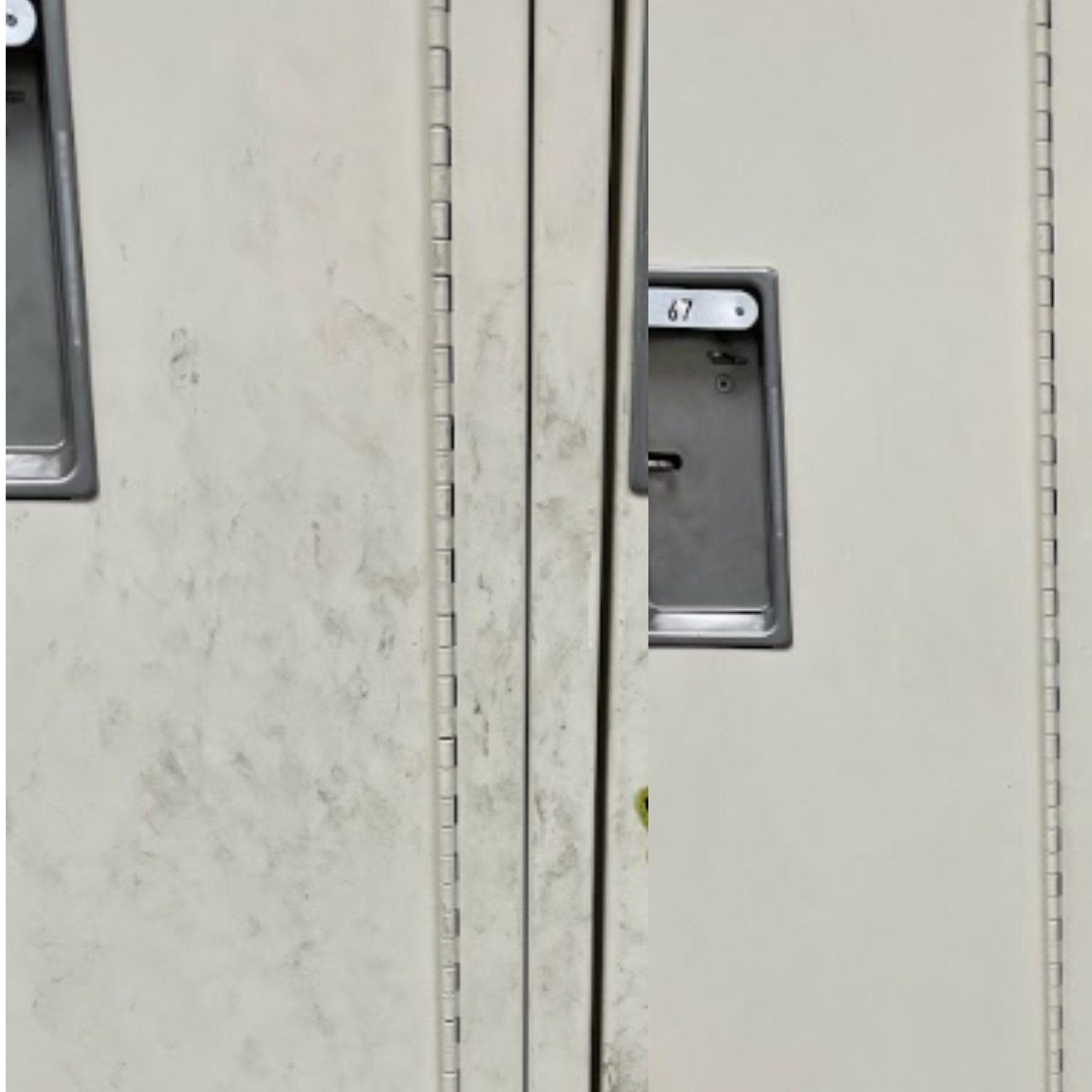
- Lockers, especially the handles and latches
In a warehouse or manufacturing plant, the list grows. Guardrails, racking uprights people grab while walking, forklift and cart handles, and the vending machines on the floor all see constant contact. Those spaces are often skipped entirely by janitorial crews because they're out on the production floor.
How electrostatic disinfection works
Wiping with a cloth only treats the side of the surface the cloth touches. Electrostatic spraying works differently. The sprayer gives the disinfectant droplets an electrical charge as they leave the nozzle. Charged droplets are attracted to surfaces and wrap around them, coating the sides and backs of handles, railings and equipment that a cloth would never reach.
We use a CDC-approved disinfectant applied with an electrostatic sprayer, and pair it with manual wipe-down of the highest-touch surfaces. The wipe-down physically removes grime, and the spray gives even coverage everywhere else. Together they do more than either one alone.
For restrooms, where the bar is higher, we use a hospital-grade disinfectant as part of our restroom deep cleaning.
One-time treatment or a recurring schedule
Some clients bring us in once, ahead of flu season or after an outbreak in the building. That gives a clean starting point. Others put touchpoint disinfection on a recurring schedule through the winter months, since the surfaces get recontaminated as soon as people come back in the door.
The right answer depends on your building. A clinic waiting room or a busy plant break room benefits from regular treatment. A small office with a handful of staff may only need it seasonally. We'll make a recommendation after we've walked the space.
Working around your people and your schedule
Disinfection works best when the building is empty, so most of our touchpoint work happens after close or between shifts. For production facilities, we plan around the line schedule so nobody has to shut down for us. Our crews are BCA-screened and insured, and the same crews return to the same buildings, so they learn where the touchpoints are in your space.
Getting started before the season peaks
The best time to start is before sick days start piling up. We offer a free onsite walkthrough, usually within 24 hours of your call, where we identify the high-touch points in your building and recommend a schedule. You get a written scope and price within hours of the visit.
Learn more about our disinfection service, or request a walkthrough. We serve facilities from our home base in Anoka across the Twin Cities metro.
Frequently asked questions
What is touchpoint disinfection?
Touchpoint disinfection is the targeted cleaning and disinfecting of surfaces that many people touch, such as door handles, time clocks, break-room appliances, handrails and shared equipment, where germs commonly pass from person to person.
What is electrostatic disinfection?
Electrostatic disinfection uses a sprayer that charges disinfectant droplets so they are attracted to surfaces and wrap around them, coating the sides and backs of handles and equipment that a cloth misses.
When should a business schedule disinfection for flu season?
Early fall, before cold and flu cases peak, is the best time to start. Many businesses keep touchpoint disinfection on a recurring schedule through the winter months.
Do you provide commercial disinfection in the Twin Cities?
Yes. First Impressions Building Services provides electrostatic touchpoint disinfection for offices, clinics, warehouses and production facilities across the Twin Cities metro, based in Anoka.
Will disinfection interrupt our workday?
No. First Impressions schedules disinfection after close or between shifts and works around production schedules, with a free walkthrough usually within 24 hours and a written scope within hours of the visit.